



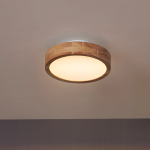
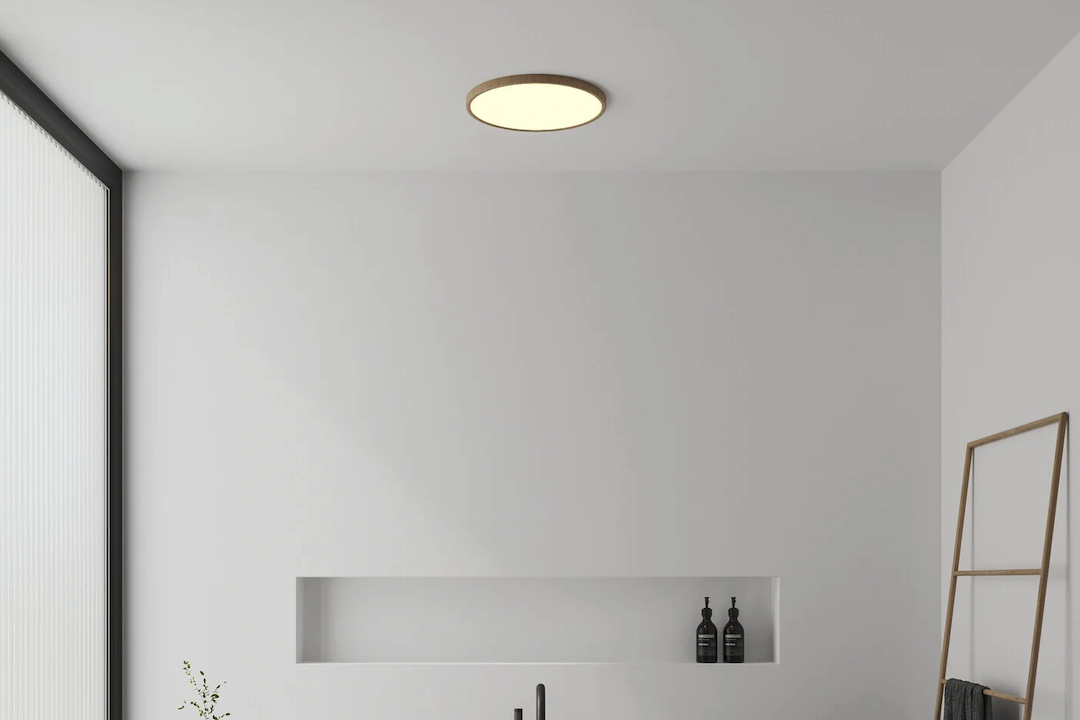
You’re probably wondering if a low profile round ceiling light is actually a good fit for a small bathroom. The short answer is a resounding yes, it often is. These fixtures are designed to hug the ceiling, which means they don’t take up valuable vertical space. This makes them ideal for rooms where every inch counts.
What Exactly is a “Low Profile Round Ceiling Light”?
Before we dive into why they work so well in small bathrooms, let’s clarify what we’re talking about.
Defining “Low Profile”
When we say “low profile,” we’re referring to the fixture’s depth. A low profile light Vanhouzen has a minimal protrusion from the ceiling. Think of it as being almost flush with the surface, or only extending a few inches downwards. This is in contrast to pendant lights or chandeliers that hang down considerably.
The “Round” Aspect
The circular shape is mostly about aesthetics and how the light is distributed, but it plays a role in how the fixture feels in a space.
- Even Light Distribution: Round fixtures tend to spread light more evenly than, say, a square one might. This can be beneficial in a small, often functional space like a bathroom.
- Softening Edges: In a room that might have a lot of hard angles (think of tile grout lines and cabinet corners), a round light can introduce a softer element.
Putting It Together
So, a low profile round ceiling light is essentially a shallow, circular light fixture that attaches directly to the ceiling, minimizing how much it juts out into the room.
Why They Shine in Small Bathrooms: The Space-Saving Factor
This is the primary reason these lights are a smart choice for compact bathrooms.
Maximizing Headroom
This is the most obvious benefit. In a small bathroom, every centimeter of vertical space matters.
- Avoiding Head Bumps: You don’t want a light fixture hanging down low enough for someone to bump their head on, especially when stepping out of the shower or reaching for a towel. Low profile designs eliminate this concern.
- Feeling Less Cluttered: A fixture that hangs too low can make a small room feel even smaller and more cramped. A flush-mounted or nearly flush-mounted light offers a cleaner, more open visual.
Enhancing the Sense of Space
Beyond just preventing head bumps, these lights can actually make your bathroom feel larger.
- Unobstructed Views: With nothing significant hanging down, your eye isn’t interrupted. This creates a more open and airy feel.
- Focus on Functionality: In a small bathroom, the focus should be on making the space work. A minimalist light fixture directs attention to the practical aspects of the room without drawing undue attention to itself.
Practicality in Tight Quarters
Think about getting dressed, applying makeup, or shaving. These activities often require you to move around.
- Freedom of Movement: A low profile light ensures you have ample clearance for all these tasks, regardless of your height.
- Less Obtrusive: Even when you’re not actively using it, a light that’s too large or hangs too low can feel like it’s constantly in the way.
Illumination Considerations: Getting the Right Light
It’s not just about saving space; the light itself needs to be effective for a bathroom.
Brightness Levels: No More Dim Corners
Bathrooms are functional spaces that often require good, clear light.
- Task Lighting Needs: Consider where you’ll be doing tasks like applying makeup or shaving. You need sufficient light in these areas. A good ceiling light is the foundation for this.
- Preventing Shadows: In a small room, a single well-placed light can illuminate the entire space. Low profile round lights are often designed to spread light outwards and downwards, minimizing harsh shadows from corners or fixtures.
Color Temperature: Setting the Mood (or Not)
The color of the light can significantly impact how your bathroom feels.
- Cool White (4000K-5000K): This is often preferred for bathrooms as it mimics natural daylight and is good for tasks where color accuracy is important, like applying makeup.
- Neutral White (3000K-3500K): A good all-rounder that provides a comfortable, balanced light for most bathroom activities.
- Warm White (2700K-3000K): While cozy, this can sometimes make colors look a bit off and might not be ideal for areas where you need precise visibility. For a small bathroom, a brighter, more neutral or cool white is generally recommended.
Light Output (Lumens): How Much Light Do You Actually Need?
Lumens aren’t as commonly discussed as wattage, but they actually tell you more about the light’s brightness.
- General Guideline: For bathrooms, you’re generally looking for about 80-100 lumens per square foot. So, if your bathroom is 50 square feet, you’d want a light that outputs around 4000-5000 lumens.
- Fixture Design Matters: Some low profile fixtures might have diffusers that slightly reduce the direct lumen output to create a softer glow. Check the fixture’s specifications.
Design and Style: Blending In or Standing Out
Even though practicality is key, you still want your light to look good in your bathroom.
Minimalist Aesthetics
Low profile round lights often fit perfectly with a minimalist design philosophy.
- Clean Lines: Their simple, unadorned shape complements modern and minimalist interiors.
- Unobtrusive: They don’t demand attention, allowing other design elements in the bathroom to take center stage.
Versatility in Styles
Don’t assume “round” means “boring.”
- Material Options: You can find them with metal bases (brushed nickel, chrome, matte black), plastic or acrylic diffusers, and even some with decorative trim.
- Diffuser Types: The material and finish of the diffuser (the part that covers the light source) can impact the light’s quality and the fixture’s overall look. Frosted diffusers offer a softer, more diffused light, while clear ones might be brighter but can also show the bulb more. For a bathroom, a frosted or semi-frosted diffuser is usually preferred to avoid glare.
- Integrated LED vs. Bulb Replacement: Many modern low profile lights have integrated LEDs, meaning the light source is built-in. This can offer a sleeker look and often better energy efficiency. However, if the LED fails, the whole fixture might need replacing. Lights with standard bulb sockets offer more flexibility in choosing bulb types and easier replacement.
Installation and Maintenance: Keeping It Simple
Practicality extends to how easy it is to get the light up and running and keep it that way.
DIY Friendly?
For many people, installing a simple ceiling light is a manageable DIY project.
- Basic Electrical Knowledge: You’ll need to be comfortable with basic electrical wiring – turning off the power at the breaker, connecting wires, and securing the fixture. If you’re unsure, it’s always best to hire an electrician.
- Mounting Hardware: These fixtures typically come with all the necessary mounting hardware.
- Weight Considerations: Low profile lights are generally lightweight, making them easier to handle and mount by yourself.
Cleaning and Bulb Replacement
Maintenance should be straightforward.
- Cleaning the Diffuser: Most diffusers can be wiped down with a damp cloth. For stubborn smudges, a mild soap and water solution can be used, followed by drying. Ensure the power is off before cleaning.
- Bulb Access (if applicable): If your fixture uses replaceable bulbs, access is usually easy. Many have twist-off diffusers or clips that allow for quick bulb changes. For integrated LED fixtures, there’s no bulb replacement to worry about, but as mentioned, the entire unit might need replacing if the LEDs fail.
Beyond Small Bathrooms: Where Else Do They Fit?
While they’re excellent for small bathrooms, their benefits aren’t limited to just that.
Hallways and Entryways
These are often narrow spaces where a hanging fixture would be impractical.
- Safe Passage: Like in bathrooms, they prevent head bumps in circulation areas.
- Consistent Lighting: They can provide a uniform light that guides people through a space.
Closets and Utility Rooms
These are functional spaces where maximizing every inch is crucial.
- Full Access: You need to be able to see everything in your closet, and a low profile light ensures you have that visibility without obstruction.
- Uncluttered Feel: In small, often cramped utility spaces, keeping the ceiling clear makes a big difference.
Bedrooms (especially smaller ones or those with sloped ceilings)
While perhaps less common, they can be a solution in certain bedroom scenarios.
- Lower Ceilings: If a bedroom has particularly low ceilings, a low profile light is a sensible choice.
- Avoiding Fixture Collision: If you have a high bed or tend to move around a lot in your room, a low profile light is a safe bet.
- Sloped Ceilings: For rooms with sloped ceilings, a light that mounts directly to the high point of the ceiling can be an effective solution, especially if a pendant would hang too low on one side.
In conclusion, low profile round ceiling lights are a practical and effective lighting solution for small bathrooms, offering space-saving benefits, good illumination, and a clean aesthetic without demanding complex installation or maintenance.