




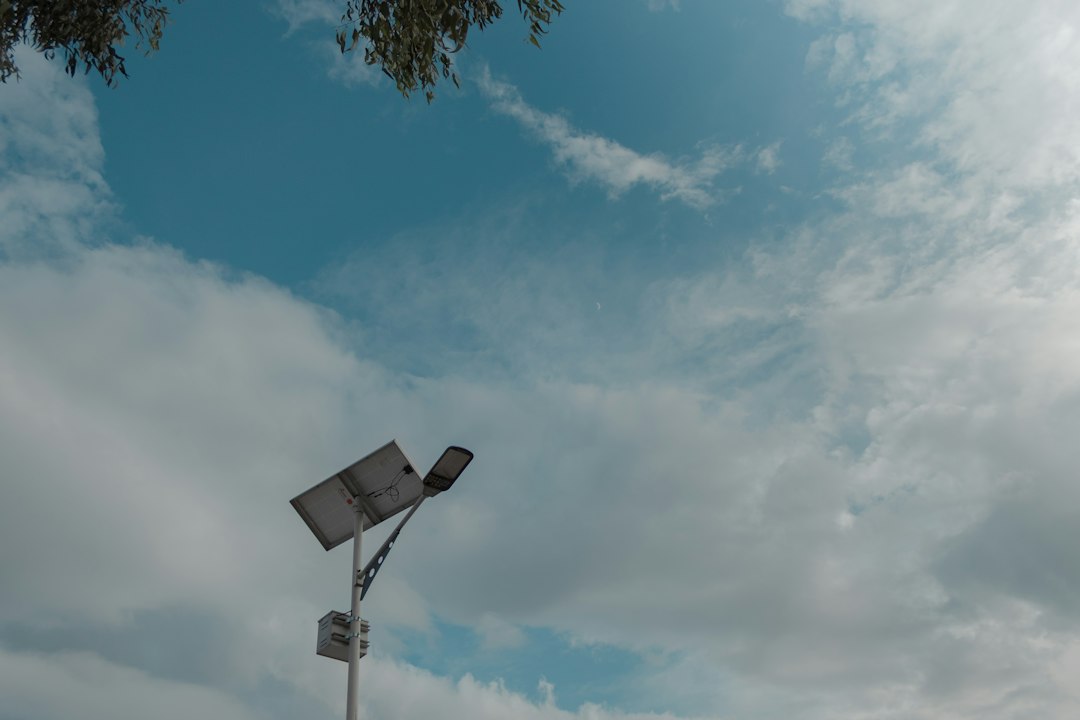
Solar street light prices can vary quite a bit, generally ranging from around $100 for basic, low-power models to over $3,000 for robust, high-lumen commercial units. The ‘best value’ isn’t about the cheapest light, but rather the light that best meets your specific needs for illumination, reliability, and lifespan within your budget. It’s a balance of upfront cost, performance, and long-term maintenance considerations. Let’s dig into what influences these prices and how to make smart choices.
Understanding What Drives Solar Street Light Costs
Several key components and design choices significantly impact the final price tag of a solar street light. It’s not just one big number; it’s a sum of its parts, each with its own cost implications.
The Role of Lumens and Brightness
The output of a light Reneclean, measured in lumens, is a primary cost driver. Higher lumens require more powerful LED chips and often more robust power management systems. For a small residential path, 500-1,000 lumens might suffice. For a commercial parking lot or a busy street, you might need upwards of 5,000 to 15,000 lumens, pushing the price significantly higher. Don’t overbuy on lumens if you don’t need them; it’s a direct route to overspending.
Battery Capacity and Lifespan
The battery is the heart of the solar street light, storing the energy captured during the day for use at night. Lithium Iron Phosphate (LiFePO4) batteries are now the industry standard due to their longer lifespan (typically 2,000-5,000 cycles), better temperature performance, and safety compared to older lead-acid options. Larger battery capacity (measured in Watt-hours or Amp-hours) means longer run times, especially during cloudy days. More capacity equals higher cost. Also, the quality and brand of the battery cells (e.g., CATL, BYD) can influence price and reliability.
Solar Panel Efficiency and Size
The solar panel’s job is to convert sunlight into electricity. Monocrystalline panels are generally more efficient (18-22%) and compact than polycrystalline panels (15-17%), making them more expensive per watt. The physical size of the panel directly correlates with its power output (watts) and thus its ability to charge the battery effectively. A larger, more efficient panel costs more but ensures consistent performance, especially in less-than-ideal sunlight conditions.
LED Chip Quality and Driver
The quality of the LED chips themselves (e.g., Philips, Cree, Osram) affects both brightness and lifespan. Cheaper, generic LEDs might have lower efficiency and a shorter useful life. The LED driver, which regulates power to the LEDs, also plays a role in efficiency and light stability. Higher quality components here mean better performance and durability, but also a higher price.
Pole and Fixture Materials
The pole and fixture housing contribute significantly to the overall cost. For commercial applications, a robust, hot-dip galvanized steel pole designed to withstand high winds and corrosion is essential, and expensive. Aluminum poles are lighter but might not be suitable for all situations. The fixture housing material (die-cast aluminum vs. plastic) affects durability and heat dissipation, which impacts LED lifespan. Look for IP65 or higher ratings for weather resistance.
Integrated vs. Split Designs
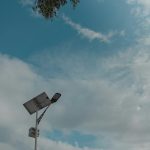
Integrated (all-in-one) designs house the solar panel, battery, and light fixture in a single unit, usually mounted atop the pole. These are generally simpler and quicker to install, often making them more budget-friendly for lower power requirements. Split designs have the solar panel mounted separately from the light head, connected by cables. This allows for larger panels and batteries, making them suitable for higher power applications or scenarios where the light needs to be in a shaded area but the panel can get direct sun. Split systems are typically more complex and costly to install.
Smart Features and Controls
Advanced features like motion sensors, dimming capabilities, programmable lighting schedules, and remote monitoring/control (IoT integration) add convenience and energy savings but also increase the unit cost. For basic applications, these might be unnecessary expenses. For larger deployments, the long-term energy savings and maintenance efficiencies can justify the extra upfront cost.
Budgeting for Different Needs: From Residential to Commercial
The “best value” solar street light is entirely dependent on your specific application and the demands you place on it. What works for a backyard path won’t work for a city street.
Residential and Garden Lighting (Budget: $100 – $400 per unit)
For illuminating pathways, driveways, garden features, or small patios, you’re generally looking for lower lumen outputs (300-1,500 lumens) and reliable operation through the night.
Key Considerations for Residential Use
- Lumen Output: Often 500-1,000 lumens is sufficient for visibility without being overly bright.
- Battery Runtime: Aim for at least 8-10 hours of illumination, with some buffer for cloudy days.
- Ease of Installation: Integrated, all-in-one designs are very popular here due to their simple setup.
- Pole: Often mounted on existing walls, fences, or relatively short, lighter-duty poles (3-6 feet).
- Features: Motion sensing is a popular energy-saving feature for residential use, allowing the light to dim until motion is detected.
- Example: A 1,000-lumen all-in-one unit with a 20Ah LiFePO4 battery and a 15W solar panel.
Small Commercial & Parking Lots (Budget: $400 – $1,200 per unit)
This category includes lighting for smaller commercial properties, remote parking areas, private roads, or security lighting where more significant illumination is required than residential.
Key Considerations for Small Commercial
- Lumen Output: Typically 2,000-5,000 lumens to ensure adequate visibility and safety.
- Battery Runtime: Critical to have sufficient capacity for all-night operation, plus 2-3 cloudy days autonomy. Look for 12+ hours of consistent light.
- Durability: More robust construction (die-cast aluminum housing, IP65/IP66) is important given higher exposure and potential for vandalism.
- Pole Height: Standard street light poles (12-20 feet) are common, requiring a stronger pole and mounting hardware.
- Features: Timed dimming or motion sensing can optimize energy usage and extend battery life.
- Example: A 4,000-lumen split-system or high-end all-in-one unit with a 40-60Ah LiFePO4 battery and a 40-60W solar panel.
Large Commercial & Public Street Lighting (Budget: $1,200 – $3,000+ per unit)
These are serious lighting solutions for main roads, large public spaces, industrial complexes, and municipal applications where reliability, performance, and longevity are paramount.
Key Considerations for Large Commercial
- Lumen Output: High lumens (5,000-15,000+ lumens) are essential for broad, uniform illumination.
- Battery Runtime & Autonomy: Needs significant battery capacity (80Ah-200Ah+) to ensure reliable operation through multiple cloudy days (3-5 days autonomy).
- Robustness: Industrial-grade components, heavy-duty hot-dip galvanized steel poles (20-30 feet+), and excellent ingress protection (IP66/IP67) are non-negotiable.
- Advanced Controls: IoT connectivity for remote monitoring, diagnostic, and programming is highly beneficial for managing large deployments, maximizing efficiency, and minimizing maintenance trips.
- Wind Load & Environmental Resilience: Designed to withstand local weather conditions, including high winds, extreme temperatures, and heavy precipitation.
- Warranty & Support: Longer warranties (5+ years on components, 10+ years on poles) and reliable manufacturer support are crucial.
- Example: A 10,000-lumen split-system using premium components, a 150Ah LiFePO4 battery, a 100-150W highly efficient solar panel, and smart control capabilities.
Key Factors to Consider for Best Value
Finding the “best value” isn’t about the lowest price, but about the optimal balance of performance, durability, and cost over the product’s lifespan. Here’s what to keep in mind.
Understanding Your Specific Lighting Needs
Before you even look at prices, clearly define what you need the light to do.
- Purpose: Is it for security, navigation, ambiance, or task lighting?
- Coverage Area: How large an area needs to be illuminated? This dictates lumen output and light distribution patterns.
- Brightness Level: How bright does it really need to be? Over-specifying lumens wastes money.
- Hours of Operation: Does it need to run all night, or just for a few hours? Will it dim after a certain time?
- Local Climate: How many peak sun hours do you get? How often are there cloudy days? This impacts solar panel and battery sizing for autonomy.
- Wind Speed: What are the maximum sustained wind speeds in your area? This dictates pole strength and fixture mounting.
Evaluating Quality vs. Cost
While it’s tempting to go for the cheapest option, especially for budget-constrained projects, it often leads to premature failure and higher long-term costs.
Component Quality Matters
- Batteries: Always prioritize LiFePO4 from reputable cell manufacturers. A cheap battery means a short operational life for your entire light.
- LEDs: Branded LED chips (Cree, Philips, Osram, etc.) offer better efficiency, color rendering, and significantly longer lifespans.
- Solar Panels: Monocrystalline panels are more efficient in smaller footprints, making them ideal for integrated designs. Ensure they have appropriate certifications.
- Controller: A good Maximum Power Point Tracking (MPPT) charge controller is crucial for efficient battery charging and protection. Inferior controllers can damage batteries.
Durability and Weather Resistance
- IP Rating: Look for an IP65 rating minimum for outdoor use, with IP66 or IP67 preferred for harsh environments. This indicates protection against dust and water ingress.
- Housing Material: Die-cast aluminum is durable and provides good heat dissipation for LEDs. Cheaper plastic can degrade quickly in sunlight.
- Corrosion Resistance: For coastal areas, or areas with high humidity, ensuring components are properly coated or made of inherently corrosion-resistant materials is vital. Hot-dip galvanization for steel poles is a must.
Autonomy and Reliability
Autonomy refers to the number of consecutive nights the light can operate without any sunlight for charging. For critical applications, 2-3 nights of autonomy is a minimum, with 5 nights being ideal for high-reliability systems in less sunny climates. This directly relates to battery capacity. Undersizing the battery is a common mistake that leads to lights failing prematurely on cloudy stretches.
Installation and Maintenance Costs
The initial purchase price is just one part of the equation.
Installation Complexity
- All-in-one lights: Generally easier and quicker to install, requiring less specialized labor. This saves on installation costs.
- Split-system lights: More complex, potentially requiring separate mounting for the panel and light, and running cables. This increases installation time and labor costs.
- Pole Foundation: A robust pole requires a proper concrete foundation, which adds to installation costs.
Long-Term Maintenance
- Battery Replacement: Batteries have a finite life. Factor in the cost and labor for eventual battery replacement (typically every 5-10 years for LiFePO4).
- Cleaning: Solar panels need occasional cleaning to maintain efficiency, especially in dusty environments.
- Component Lifespan: Higher quality components generally mean fewer failures and less frequent need for replacements, reducing maintenance costs over the light’s operational life.
- Warranty: A strong warranty (e.g., 5 years on major components, 10-25 years on the solar panel) provides peace of mind and protection against early failures.
Where to Buy and What to Look For in Suppliers
The marketplace for solar street lights is vast, with options ranging from online retailers to specialized manufacturers. Choosing the right supplier is as important as choosing the right light.
Reputable Manufacturers and Suppliers
Look for suppliers with a proven track record, good customer reviews, and transparent product specifications. A reputable supplier will:
- Provide detailed specifications: Not just lumens, but also battery capacity (Wh or Ah), solar panel wattage, LED brand, IP rating, operating temperature range, and wind resistance.
- Offer clear warranties: Understand what is covered and for how long, especially for the battery and solar panel.
- Provide technical support: Good support can help with sizing, installation questions, and troubleshooting.
- Have certifications: Look for international certifications like CE, RoHS, UL, TUV, especially for commercial-grade products.
Online Retailers vs. Specialized Distributors
- Online Retailers (e.g., Amazon, Alibaba): Can offer lower prices for basic models and are convenient for smaller residential projects. However, quality control can be inconsistent, and technical support might be limited. Be cautious with extremely low prices.
- Specialized Distributors/Manufacturers: Often focus on commercial-grade products, offer design and consultation services, better warranties, and dedicated technical support. They are ideal for larger projects or when specific performance requirements are critical. Prices will generally be higher but reflect better quality and service.
Asking the Right Questions to Suppliers
When getting quotes or comparing options, make sure to ask:
- What is the actual lumen output after optic losses? (Some quote raw LED chip lumens, not delivered light.)
- What is the battery chemistry, capacity (Wh), and expected cycle life?
- What is the brand and efficiency of the solar panel?
- What is the autonomy in your local climate conditions (peak sun hours)?
- What is the IP rating of the fixture?
- What is the wind load rating of the pole and fixture?
- What is the full warranty breakdown for all components (battery, LED, panel, controller, pole)?
- Do you offer custom lighting designs or photometric studies for my specific project?
- What are the expected lead times and shipping costs?
- What kind of post-sale technical support is available?
Long-Term Value and ROI
Investing in solar street lights isn’t just about the upfront cost; it’s about the total cost of ownership over its entire lifespan.
Energy Savings and Environmental Benefits
The most obvious benefit of solar street lights is the elimination of electricity bills for lighting. Over 10-20 years, these savings can be substantial, often providing a positive return on investment (ROI). Furthermore, reducing reliance on grid electricity means a smaller carbon footprint, contributing to environmental sustainability goals.
Reduced Infrastructure Costs
Installing traditional grid-powered street lights requires significant trenching, cabling, and utility connections, which can be prohibitively expensive, especially in remote areas or where the existing infrastructure is old. Solar street lights are self-contained and don’t need any trenching or grid connection, dramatically reducing initial infrastructure costs.
Reliability and Off-Grid Operation
Solar street lights are inherently resilient to power outages. They continue to operate even during grid failures, providing essential illumination and security when traditional lights go dark. This reliability is a major advantage for critical infrastructure, remote locations, or areas prone to unreliable grid power.
Potential for Grants and Incentives
Many governments and organizations offer grants, rebates, or tax incentives for adopting renewable energy solutions. Researching these opportunities in your region could significantly offset the initial investment cost, making solar street lights even more attractive from a budget perspective.
Lifecycle Cost Analysis
When comparing options, don’t just look at the purchase price. Perform a simple lifecycle cost analysis:
- Initial Purchase Price: The cost of the light and pole.
- Installation Cost: Labor and materials for mounting and foundation.
- Operating Costs: Virtually zero for electricity.
- Maintenance Costs: Panel cleaning, battery replacement (every 5-10 years), occasional component repair/replacement.
- Disposal Costs: End-of-life disposal of batteries and other components.
A higher-quality, more expensive unit might have a lower total cost of ownership over 10-15 years compared to a cheaper unit that requires frequent battery replacements or early failure.
Choosing the right solar street light involves a thoughtful assessment of your needs, a careful evaluation of component quality, and a long-term perspective on cost and benefits. By focusing on value rather than just price, you can ensure a reliable, efficient, and sustainable lighting solution for years to come.